Content
I’ve lost count of the number of times a Star Trek phrase has popped into my head during a client meeting. Not the obvious ones, mind you. Not the “Beam me up, Scotty” moments when I’m desperate to escape a conversation about why their Facebook reach has tanked. I’m talking about the lines that genuinely reframe a problem, the ones that make you sit back and think, “Alright, that’s actually quite profound for a show about people in pyjamas pointing phasers at rubber foreheads.”
Star Trek phrases have a habit of doing that. They sneak past your defences, dressed up as sci-fi fluff, and then land squarely in the part of your brain that handles leadership decisions, ethical dilemmas, and whether to have a second biscuit. I’m the head-honcho at an award-winning digital marketing agency, and I’ve built a career on logic, creativity, and the occasional gut-feel gamble. Trek has been the unexpected business manual I never knew I needed.
This isn’t a definitive list of every quotable line from fifty-plus years of television. It’s a curated, opinionated, slightly geeky tour through the phrases that actually help me run a business, manage a team, and occasionally remember to be a decent human being. We’re going beyond the catchphrases and into the bridge, the sickbay, and yes, even the newer shows that some fans love to hate. Yep, even Discovery.
Why Star Trek Phrases Stick with Entrepreneurs
Most science fiction is obsessed with dystopia. Grey skies, authoritarian governments, technology that’s turned on its creators. It’s compelling drama, but it’s not exactly a blueprint for building a company. Star Trek is different. It’s fundamentally optimistic about the future of work. Problems exist, sure, but they’re solved through logic, collaboration, and a willingness to hear out the weirdo with the pointy ears before making a decision.
That philosophical bent in the writing is what separates a Trek quote from a generic motivational poster. When Picard delivers a line about duty or truth, it’s not just filling airtime before the commercial break. It’s a thesis statement on leadership. It’s the sort of thing you can mentally unpack during a tough quarter when the numbers aren’t where you promised they’d be.
I learned this the hard way a few years back at Delivered Social. We’d executed a campaign flawlessly. The targeting was spot on, the creative was sharp, the budget was optimised to the penny. And it still underperformed. The client was, understandably, frustrated. I sat in my office afterwards, staring at the ceiling, and the phrase that surfaced wasn’t from a business book. It was Picard: “It is possible to commit no mistakes and still lose. That is not a weakness; that is life.” It didn’t fix the numbers, but it reframed the failure. Strategy isn’t about being right every time. It’s about how you handle the outcome, learn, and adapt.
There’s also the community angle. Hop onto any Reddit thread or TrekBBS forum, and you’ll find thousands of fans passionately debating their favourite lines. These aren’t passive viewers. They’re people who have integrated this philosophy into their lives. When you quote Trek in a business context, you’re not just being clever. You’re signalling to other fans that you speak the same language. That shared vocabulary builds trust faster than any elevator pitch.
The Captain’s Log: Leadership Phrases from the Bridge
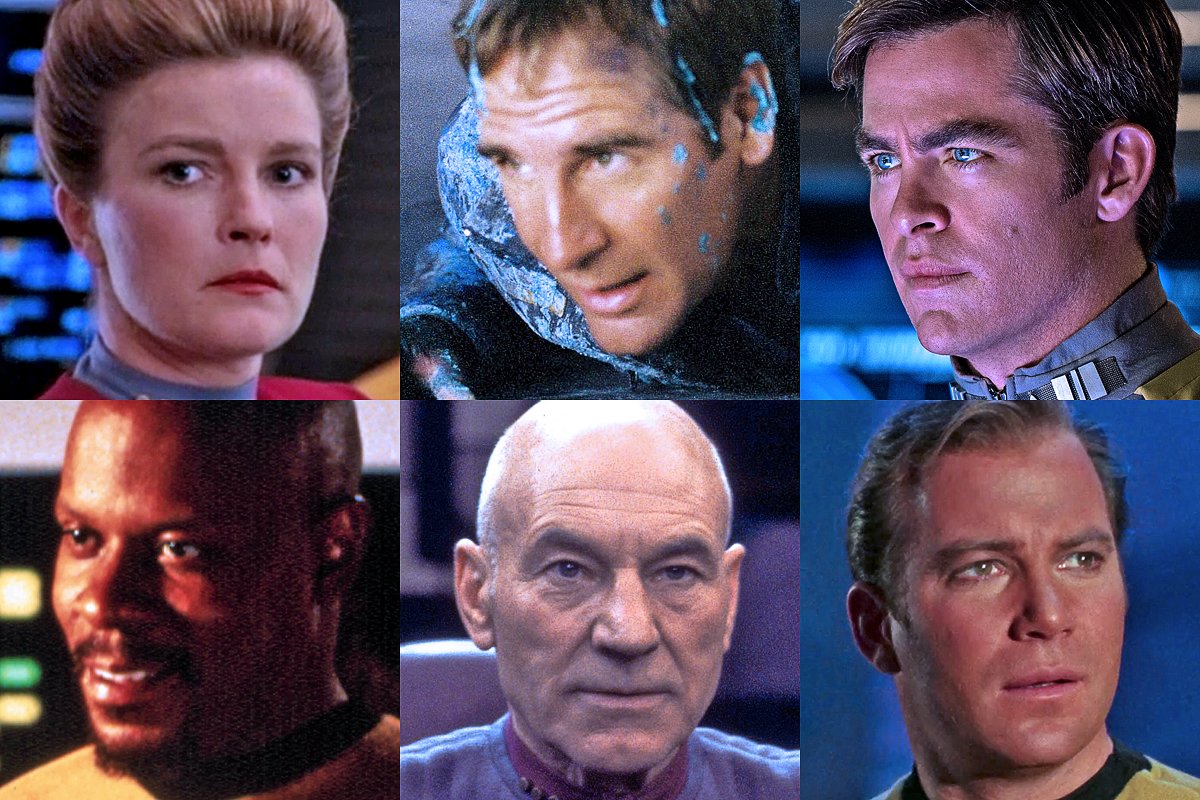
The captain’s chair is where the buck stops. Every entrepreneur sits in some version of it, even if the chair in question is a slightly wobbly IKEA number and the bridge is a converted spare bedroom. The three captains I return to most often offer three very different leadership styles, and I’d argue a healthy business needs all of them in the room at different times.
Jean-Luc Picard: The Art of Measured Command
Picard is the CEO you wish you’d had at your first job. Thoughtful, principled, and incapable of making a decision without considering the ethical implications. His phrases are less about rallying the troops and more about setting a standard.
“Make it so.” Three syllables that do more heavy lifting than any other phrase in the franchise. It’s not “OK, let’s give it a go.” It’s not “Sure, why not.” It’s a declaration of confidence. When I sign off on a new SEO services strategy for a client, that’s the energy I’m channelling. The research is done, the plan is solid, and now we execute with certainty. It closes the loop and gives the team permission to move forward without second-guessing.
“The first duty of every Starfleet officer is to the truth.” This one sits on my shoulder during every reporting meeting. In social media management, it’s tempting to frame the metrics in the most flattering light possible. Highlight the engagement spike, gloss over the conversion drop. But that’s a short-term game. Honest reporting builds long-term partnerships. Clients who trust your bad news are clients who’ll stick around for the good news.
And then there’s the mistake quote I mentioned earlier. I come back to it constantly. Entrepreneurship is a parade of small failures punctuated by occasional victories. If you can’t separate your self-worth from the outcome of a campaign, you’ll burn out within two years. That phrase gives you permission to lose without being a loser. It’s a mature perspective that a lot of hustle culture misses entirely.
James T. Kirk: The Gut-Feel Gambler
If Picard is the CEO, Kirk is the founder. He’s all instinct, charisma, and a willingness to blow up the rulebook if the rulebook isn’t working. You need a bit of Kirk in you to start something from nothing.
“Risk is our business.” It’s a direct challenge to the overly cautious entrepreneur who’s built seventeen spreadsheets but hasn’t actually launched anything. The safe path is rarely the one that leads to interesting places. I think about this whenever we’re debating whether to try a new creative content production format or launch a podcast series that might flop. The risk of looking silly is always there. The risk of never trying is worse.
“I don’t believe in the no-win scenario.” Pure, unfiltered entrepreneurial spirit. In website development, you will hit bugs. You will face scope creep. You will have a client ask for a feature that makes no technical sense whatsoever. The Kirk mindset refuses to accept that the project is doomed. There’s always a solution, even if it means reprogramming the simulation so you can beat it. I’m not advocating cheating your clients, obviously. But I am advocating a refusal to surrender to a problem just because it looks insurmountable at first glance.
And yes, we have to include “To boldly go where no man has gone before.” It’s the mission statement of the entire franchise. Reframed for 2026, it’s about pioneering in your niche. Every market has unexplored territory. Maybe it’s a new angle for your blog network, or a fresh approach to training and workshops that nobody else is offering. The frontier is metaphorical, but the spirit of exploration is the same.
Kathryn Janeway: Resilience Under Pressure
Janeway doesn’t get enough credit in these discussions. Stranded decades from home, facing impossible odds, and she never once considered giving up. Her leadership style is forged in isolation and necessity, which makes it remarkably relevant for anyone running a business through uncertain times.
“There’s no way out. There’s only a way through.” This is the brutal truth of scaling a company. You can’t skip the hard parts. You can’t outsource the difficult conversations. You have to go through them, and you have to keep the crew together while you do it. I’ve had months where this phrase was basically my internal monologue on a loop.
“The line must be drawn here.” Janeway drew it against the Borg. I draw it against scope creep. When we’re scoping a training and workshops contract, clarity on boundaries is everything. What’s included, what’s extra, and what’s simply not on the table. Setting that line early prevents resentment later. It’s not about being difficult. It’s about being professional.
The Logic of the Science Officer: Spock and Data
Every entrepreneur needs an inner Spock. That voice that looks at a disaster and says, calmly, “Fascinating,” before getting to work on a solution. Emotional regulation is an underrated business skill, and nobody modelled it better than the half-Vulcan science officer.
“Fascinating” is a single word that reframes a crisis as a data point. When a client throws a curveball, or an algorithm update tanks your traffic, your first instinct might be panic. But if you can train yourself to pause and think “fascinating” instead, you’ve bought yourself a few seconds of objectivity. I use this trick constantly when reviewing analytics for the Singles Warehouse blog network. A sudden dip isn’t a catastrophe. It’s a fascinating puzzle that needs solving.
“The needs of the many outweigh the needs of the few. Or the one.” This is a tough one for business owners who want to keep everyone happy. Resource allocation means making choices. Which projects get funding? Which clients get the A-team? Which initiatives do you kill so the core business can thrive? At Delivered Social, we’ve had to make those calls. It never feels good in the moment, but spreading yourself too thin serves no one.
“Insufficient facts always invite danger.” Spock’s warning against jumping to conclusions is basically the entire business case for proper research. You don’t build an SEO campaign on a hunch. You don’t launch a product because your mate thinks it’s a good idea. You gather the data, you analyse the landscape, and then you act. The alternative is expensive guesswork dressed up as intuition.
Data’s quest to understand humanity offers a different lesson. He wanted to feel, not just compute. In 2026, we’re surrounded by AI tools that can generate content, analyse data, and automate workflows. They’re brilliant. But they’re also Data before the emotion chip. The human touch, the genuine connection, the slightly imperfect authenticity of a real person writing a real email, that’s what builds brand loyalty. Automation handles the routine. Humanity handles the relationship.
The Doctor’s Orders: McCoy and the Human Element
You can’t run a business on logic alone. You need the emotional check, the gut-level read on a situation, the willingness to tell someone an uncomfortable truth. That’s McCoy’s territory, and he delivers it with a grumpy charm that I find endlessly relatable.
“He’s dead, Jim.” Sometimes a marketing campaign is just dead. You’ve tried CPR. You’ve increased the budget. You’ve tweaked the creative. And it’s still flatlining. The kindest thing you can do is call it, learn what you can, and move on to the next thing. Mourning a failed initiative for too long drains resources and morale.
“I’m a doctor, not a bricklayer.” This is the phrase I mentally deploy when a client’s expectations have drifted into fantasy. No, I can’t deliver a full social media management overhaul in a week. No, I can’t make your website rank number one for “shoes” by Tuesday. I’m a digital marketer, not a magician. The phrase is a reminder that professional boundaries exist for a reason. Respecting your own expertise means pushing back when you’re asked to do something outside your remit, or within an impossible timeframe.
McCoy represents the heart of the Enterprise. In the triad of Kirk, Spock, and McCoy, he’s the conscience, the empathy, the bit that cares about the individual when the logic says otherwise. The best business decisions I’ve made have come from a blend of Spock’s analysis and McCoy’s instinct. Data tells you what’s happening. Empathy tells you why it matters to the person on the other end of the screen.
The New Frontier: Modern Star Trek Phrases (2026 Edition)
Most Star Trek quote lists are museum pieces. They stop somewhere around the final season of Voyager and pretend the last twenty-five years of television didn’t happen. That’s a mistake. The modern series have produced lines that are not only quotable but genuinely useful for the current moment.
Lower Decks, for all its animated chaos, dropped one of the most emotionally intelligent revisions of a classic line I’ve ever heard. “The needs of the many outweigh the needs of the few… or the one. But the needs of the one are still important.” It’s a direct response to Spock’s original, and it’s the nuance that modern leadership demands. Yes, the company’s survival matters. But so does the team member who’s struggling. Balancing those two truths is the actual job.
Strange New Worlds has given us Captain Pike, a leader who operates on hope and a clear-eyed vision of the future. There’s a moment where he talks about seeing the future you want and working backwards from it, which is essentially strategic planning with a Starfleet badge. Long-term business growth requires that same ability to hold a vision in your head while dealing with the messy reality of today. Pike makes optimism look like a leadership strategy rather than a personality trait.
And yes, Discovery. I know it’s divisive. I know the tone is different, the visuals are different, and the spore drive makes no scientific sense whatsoever. But Michael Burnham’s emphasis on “context” is a valuable reminder. Before you react to a situation, understand the full picture. Before you judge a team member’s mistake, understand what led to it. Context doesn’t excuse poor performance, but it informs a fair response. I’m a completist, not a gatekeeper. Good advice is good advice, regardless of which series it came from.
How to Use Star Trek Phrases in Your Daily Work
Quoting Star Trek at work only lands if you do it with a light touch. Nobody wants to work with the person who responds to every email with a Klingon proverb. But woven in subtly, these phrases become a shared language that builds team culture and signals your leadership style.
Use “Make it so” as your standard project approval sign-off. It’s quicker than writing a paragraph of encouragement, and it carries an implicit vote of confidence. Your team will start to associate those three words with the green light.
Deploy “Fascinating” as a verbal pause before reacting to bad news. It buys you three seconds to compose yourself and sets a tone of curiosity rather than blame. In a meeting, that shift can change the entire direction of the conversation.
Build a team culture around a few select phrases. At Delivered Social, we’ve got our own internal shorthand that’s part geek, part professional. It creates a sense of belonging that goes beyond job titles and org charts. Shared references are the glue of any strong culture.
A word of caution: authenticity matters. If you’ve never watched an episode of Star Trek in your life, don’t start dropping Picard quotes into your Monday morning stand-up. It’ll sound hollow, and people will see through it. But if you’re a genuine fan, leaning into that part of your personality builds a stronger connection with your audience and your team. People want to work with humans, not corporate robots. And if that human happens to have strong opinions about the best starship captain, so much the better.
Final Frontier: Your Favourite Star Trek Phrase?
I’ve shared the lines that shaped my approach to business, leadership, and the occasional existential crisis over a spreadsheet. But the beauty of Star Trek is that different phrases resonate with different people. What lands for me might not land for you. What helped me through a difficult client situation might not be the line that gets you through yours.
I’d genuinely love to hear yours. Drop your favourite Star Trek phrase in the comments, or find me on social media and let’s geek out about it. As I always say, live long and prosper, and make sure your website ranks for it. If you need a hand with that, you know where to find me at Delivered Social. And if you want more of this blend of business strategy and unapologetic fandom, the Delivered Social Podcast is where I stretch my legs on these topics regularly. Engage.
Jonathan Bird
Head-Honcho over at DeliveredSocial.com – an award-winning digital marketing agency. You’ll often find me tucked away watching Star Trek (yep even Discovery…) or reading the latest business book (it’s my thing!).
Head-Honcho over at DeliveredSocial.com – an award-winning digital marketing agency. You’ll often find me tucked away watching Star Trek (yep even Discovery…) or reading the latest business book (it’s my thing!).