Content
If you’ve been wondering what exactly The Burn in Star Trek was, you’re not alone. It’s one of the most debated plot points in modern Trek, and I’ve got the full breakdown for you.
I’m Jonathan, and when I’m not running my digital marketing agency Delivered Social, you’ll find me deep in Star Trek lore, probably rewatching Deep Space Nine for the fifteenth time (for the record, I’ve watched it more than 15 times). I’ve always believed that great sci-fi teaches us something about our own world, and The Burn is a prime example. It’s a story about catastrophe, resilience, and what happens when the systems we rely on suddenly fail (a bit like COVID, really). Whether you’re a business owner who dabbles in Trek or a full-on Trekkie who knows their warp cores from their impulse engines, this is the clearest explanation you’ll find.
The Canonical Explanation: What Actually Happened During The Burn
The Burn occurred in approximately 3069, a single cataclysmic event that rippled across the entire galaxy in an instant. It wasn’t a war, an invasion, or a weapon of mass destruction. It was something far stranger and, in many ways, more terrifying. Most of the dilithium in the known universe went inert simultaneously. If you know your Trek, you’ll understand why that’s a death sentence. Dilithium is the element that regulates matter-antimatter reactions in starship warp cores. When it goes inert, that reaction becomes wildly unstable. Every active warp core, every planetary reactor using dilithium, detonated at the same moment.
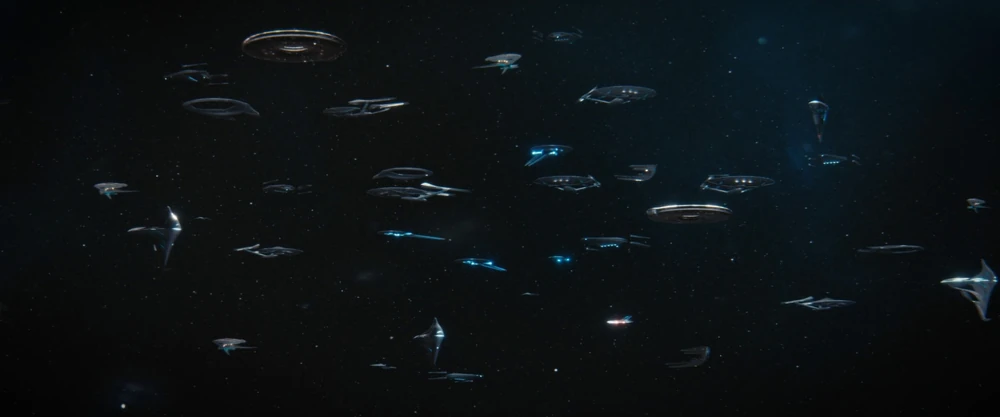
The cause was a Kelpien child named Su’Kal. He was born on a dilithium-rich planet inside the Verubin Nebula, where his pregnant mother had been stranded after a research mission went wrong. The planet’s radiation was lethal, and Su’Kal absorbed enormous amounts of it in utero, fundamentally altering his biology. He grew up alone on that planet, his mother having died from radiation poisoning when he was still very young. The trauma of witnessing her death, combined with his unique connection to the dilithium around him, created a massive subspace shockwave. That shockwave resonated at precisely the frequency needed to render active dilithium inert across the entire galaxy. It was not an attack. It was a child’s cry of grief, amplified to unimaginable scale.
Some ships saw their demise coming. The shockwave had a small delay as it propagated, meaning crews on the outer edges of its reach had seconds, perhaps minutes, to understand what was about to happen. One of the most heartbreaking details is that the ship carrying Chancellor (Captain) Nahla Ake’s son was among those destroyed (a little Starfleet Academy reference there). The Klingon Empire lost its heir in that moment, a blow that would echo through their politics for over a century.
The Aftermath: How The Burn Reshaped the Galaxy
The Near-Collapse of the Federation
The United Federation of Planets was devastated. Overnight, the organisation that had bound hundreds of worlds together in peace and cooperation lost its ability to function. Supply chains collapsed. Communication networks went dark. Member worlds were isolated, cut off from the support and trade that had sustained them for centuries. The Federation didn’t just shrink; it crumbled. By the time the USS Discovery arrived in the 32nd century, the Federation had been reduced to a fraction of its former size, clinging to survival with a handful of remaining ships and a headquarters that moved constantly to avoid detection by hostile forces. It’s a sobering thought: a civilisation that had endured the Borg, the Dominion War, and countless other threats was nearly undone by a single, tragic accident.
The Rise of the Emerald Chain and Other Powers
When the Federation retreated, others rushed to fill the void. The Emerald Chain, a ruthless syndicate built on organised crime and exploitation, became one of the dominant powers in the galaxy. Led by the Orion and Andorian alliance, they controlled trade routes, enslaved populations, and operated with impunity. Another group, Venari Ral, carved out its own territory through similar means.
The Klingon Empire, already reeling from the loss of its chancellor’s son, was hit especially hard. Countless ships and colonies were lost, and the Empire fractured into warring houses.
The Gorn, meanwhile, attempted something desperate. They tried to create artificial wormholes as an alternative to warp travel. The experiment failed catastrophically, destroying subspace in a two-light-year diameter and rendering that entire region impassable.
The Impact on Non-Federation Species
Canon is frustratingly sparse on the specifics for some of the major powers (maybe Discovery should have been given more seasons to explore this?). We know the Klingons suffered terribly, but what of the Romulans, the Cardassians, the Dominion? The truth is, the writers left much of that unexplored. What we can infer is that no spacefaring civilisation escaped unscathed.
Anyone who relied on dilithium, which was essentially everyone, faced the same sudden, violent losses. The Burn reset the galactic balance of power completely. Species that had been dominant for millennia were suddenly vulnerable, and those who had been marginalised found new opportunities in the chaos. It’s a fascinating, if underexplored, aspect of the story.
The SB-19 Red Herring: What Was Blamed Before the Truth Came Out
Before Discovery uncovered the truth about Su’Kal, the galaxy had its own explanation for The Burn, and it was wrong. The Ni’Var, formerly known as the Vulcans and Romulans who had reunified, had been working on an alternative warp drive project called SB-19. The theory was that their experiments had somehow triggered the catastrophe. This accusation led to Ni’Var seceding from the Federation, a decision that deepened the political chaos and severed one of the Federation’s founding members from the fold. The Vulcans and Romulans, already struggling with their own internal tensions, were effectively ostracised.
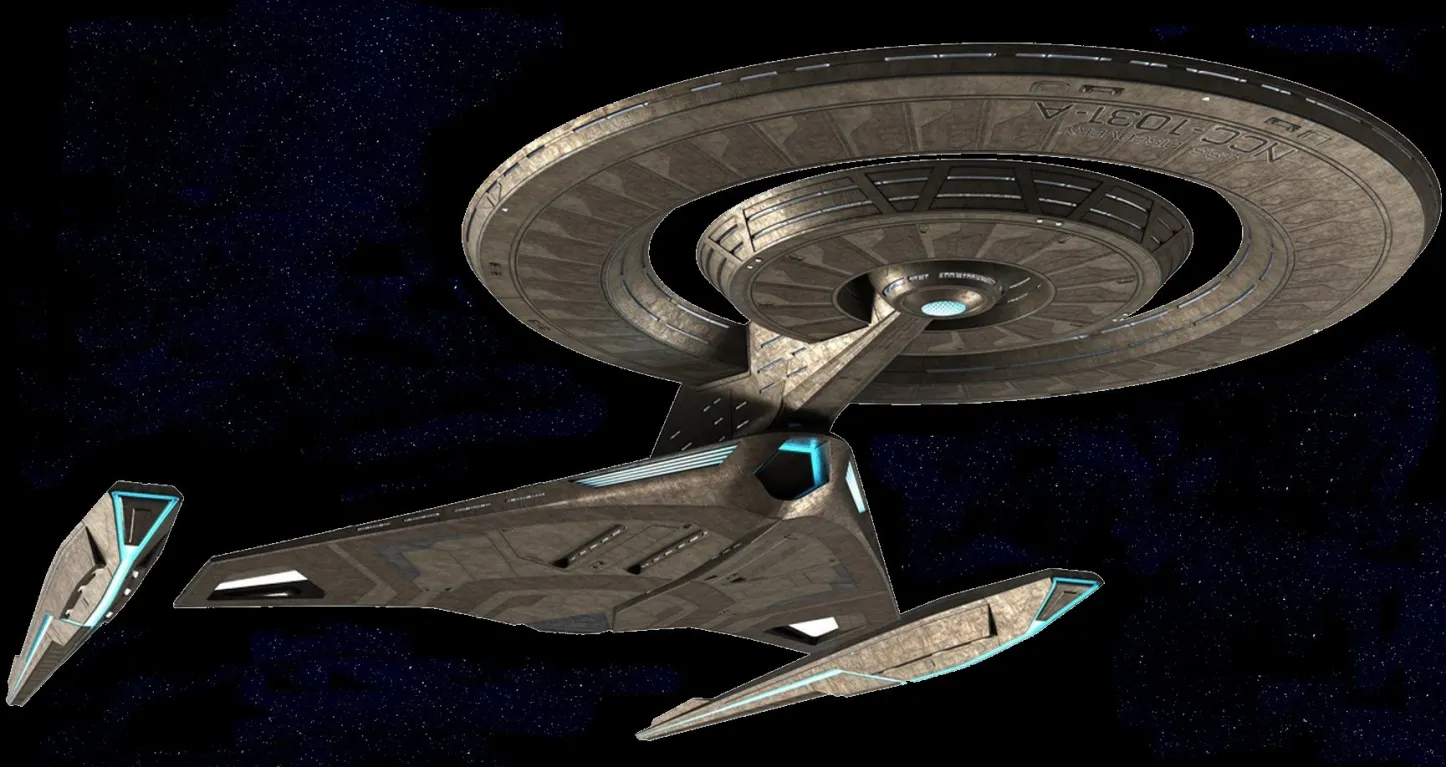
Discovery’s investigation eventually proved that SB-19 was not the cause. The project had been a red herring, a convenient scapegoat for a galaxy desperate for someone to blame. When the truth came out, it paved the way for Ni’Var to rejoin the Federation, a moment of reconciliation that felt genuinely earned. This whole thread is a brilliant example of how misinformation can shape interstellar politics. It’s something I see in business and marketing all the time: a rumour takes hold, and before you know it, entire strategies are built around a false premise. I talk about this sort of thing on the Delivered Social Podcast, because the principles are surprisingly similar whether you’re running a starship or a small business.
The Science Behind The Burn: Dilithium, Subspace, and a Child’s Cry
Let’s get properly geeky for a moment, because the science behind The Burn is genuinely clever. Dilithium, in Star Trek lore, is not a fuel. It’s a regulator. It controls the matter-antimatter reaction that powers a warp core, allowing the energy to be harnessed safely. When dilithium goes inert, that control vanishes, and the reaction becomes instantly catastrophic. Dr. Erin Macdonald and Dr. Mohammed Noor, the science advisors on Star Trek: Discovery, explained that Su’Kal’s cry created a subspace shockwave that resonated at the exact frequency needed to destabilise active dilithium. The planet where he lived was incredibly rich in the element, which amplified the effect to a galactic scale.
Is it plausible? Well, no, not in any real-world physics sense. But it’s internally consistent with Trek’s established rules, and that’s what matters. The idea that a biological being could develop a connection to a mineral through prolonged radiation exposure is pure sci-fi, but it’s the kind of imaginative leap that makes the franchise so enjoyable. It’s a fascinating mix of real physics and speculative fiction, and honestly, it’s the kind of geeky detail I love diving into on a quiet evening with a cup of Earl Grey tea and a stack of Star Trek reference books.
Was The Burn a Good Story? A Fan’s Honest Take
I’m going to be straight with you: The Burn has been heavily criticised by fans. Scroll through any Reddit thread or YouTube comment section, and you’ll find plenty of people calling the cause “ridiculous” or “ham-handed.” I understand the frustration. A child’s tantrum causing a galaxy-wide catastrophe feels like a stretch, even for a franchise that once had Kirk defeat a lizard with a cannon made of bamboo. There’s a part of me that wishes the explanation had been something more intricate, something that tied into the broader mythology of the series.
But here’s my take: The Burn works as a metaphor. It’s about the fragility of systems we take for granted, whether that’s dilithium, supply chains, or even your business’s online presence. Yes, I’m going there. The Critical Star Trek Studies Substack, which has over a thousand subscribers and published a fascinating analysis in March 2026, argues that The Burn is a “meta” storytelling device.
The writers, they suggest, were writing their own relationship with fan culture into the plot. The Burn as a concept may even have been borrowed from Andromeda, a Gene Roddenberry concept, as a bid for legitimacy among long-time fans. I think there’s something to that. The Burn initially seemed like a climate change allegory, a warning about over-reliance on a single resource. But the revelation that it was a freak accident, and the subsequent discovery of a new dilithium planet, arguably undercuts that message. It becomes a story without a clear lesson, which is either frustratingly nihilistic or refreshingly honest, depending on your perspective.
Ultimately, it’s a divisive plot point, but it gave us some incredible character moments and a fresh start for the galaxy. And let’s be honest, watching Saru confront his own people’s trauma was some of the best Star Trek in years.
What The Burn Teaches Us About Resilience (Yes, Even in Business)
I can’t help but see business lessons in everything, and The Burn is no exception. The Federation’s collapse was caused by over-reliance on a single resource. Every ship, every reactor, every piece of critical infrastructure depended on dilithium. When that resource failed, the entire system failed with it.
Sound familiar?
It’s the same reason I advise clients through Delivered Social to diversify their marketing channels. If all your leads come from one platform, and that platform changes its algorithm or shuts down, you’re in trouble. I’ve seen businesses collapse because they put all their eggs in one basket: one supplier, one product, one social media channel. The Burn is a sci-fi reminder to build redundancy into your operations.
The Federation survived because it adapted. Slowly, painfully, and with enormous loss, but it did. That’s a lesson for any small business owner facing a sudden market shift. You might not be dealing with a galaxy-wide dilithium shortage, but a sudden change in consumer behaviour or a new competitor can feel just as catastrophic. The key is to keep moving, keep adapting, and keep looking for new ways to connect with your audience. If you’re looking for a practical way to future-proof your brand, I’d love to chat about SEO services or social media management, but that’s a conversation for another day. For now, just remember: even the mightiest Federation can fall if it relies too heavily on one thing.
Frequently Asked Questions About The Burn
- When did The Burn happen? Circa 3069 in the Star Trek timeline, roughly 120 years before the USS Discovery arrived in the 32nd century.
- Who caused The Burn? A Kelpien child named Su’Kal, whose emotional trauma triggered a subspace shockwave that rendered active dilithium inert across the galaxy.
- How did The Burn affect the Federation? It nearly collapsed the Federation entirely. Member worlds were isolated, Starfleet was decimated, and the organisation shrank to a shadow of its former self.
- Was The Burn caused by SB-19? No. The Ni’Var alternative warp drive project was initially blamed, but Discovery later proved it was not the cause, allowing Ni’Var to rejoin the Federation.
- How many people died in The Burn? The exact death toll is still unknown, but it was galaxy-wide and catastrophic. Every active warp core detonated, meaning billions of lives were likely lost in an instant.
Final Thoughts: Why The Burn Still Matters
The Burn is more than a plot device. It’s a reflection of our own fears about collapse, isolation, and the fragility of progress. Whether you love it or hate it, and I’ve made my peace with both camps, it sparked some of the most interesting conversations in modern Trek fandom. It forced the franchise to reckon with the idea that the Federation isn’t invincible, that progress can be undone, and that even the most advanced civilisations are vulnerable to tragedy.
For me, as someone who runs a digital marketing agency and loves a good sci-fi analogy, it’s a reminder that even the biggest disasters can lead to new beginnings. The Federation rebuilt. Ni’Var returned. Discovery found its place in a strange new world. If you’ve got thoughts on The Burn, or just want to talk Trek over a coffee, drop me a line. I’m always up for a good debate, whether it’s about warp mechanics or the best way to grow your business online. And if you want to read more of my Trek ramblings, you’ll find plenty over on my Star Trek category page.
Live long and prosper, friends.
Jonathan Bird
Head-Honcho over at DeliveredSocial.com – an award-winning digital marketing agency. You’ll often find me tucked away watching Star Trek (yep even Discovery…) or reading the latest business book (it’s my thing!).
Head-Honcho over at DeliveredSocial.com – an award-winning digital marketing agency. You’ll often find me tucked away watching Star Trek (yep even Discovery…) or reading the latest business book (it’s my thing!).