
Content
I have a confession to make. When I first saw the USS Franklin in Star Trek Beyond, I didn’t get it. A ship that predates the NX-01 Enterprise but carries a higher registry number? A Warp 4 vessel that looks nothing like anything we’d seen from that era? My brain, trained on decades of Star Trek canon, immediately started poking holes. But here’s the thing: the more I dug into the uss franklin star trek story, the more I realised this little ship might just be the most underrated vessel in the entire franchise. It’s a pioneer, a survivor, a tribute to a legend, and a plot device that actually makes sense once you stop shouting “that’s not canon” at the screen. This is the hill I’m willing to die on, and by the end of this article, I hope you’ll at least understand why.
The USS Franklin: A Ship Out of Time
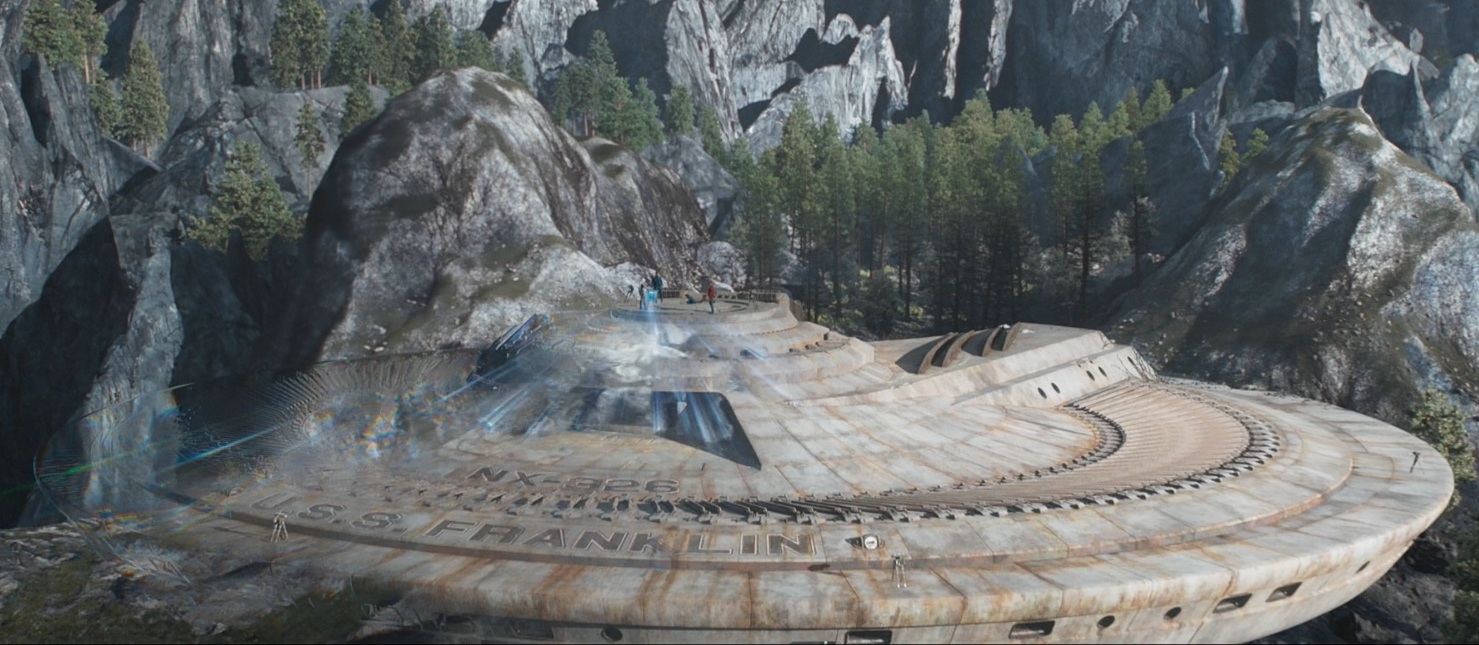
The USS Franklin (NX-326) was a Freedom-class starship launched from the San Francisco Fleet Yards sometime between 2145 and 2151. Let that sink in for a moment. This ship left spacedock before the NX-01 Enterprise was even a gleam in Henry Archer’s eye, yet its registry number suggests it came much later. That’s the puzzle that’s been quietly driving fans round the twist since 2016.
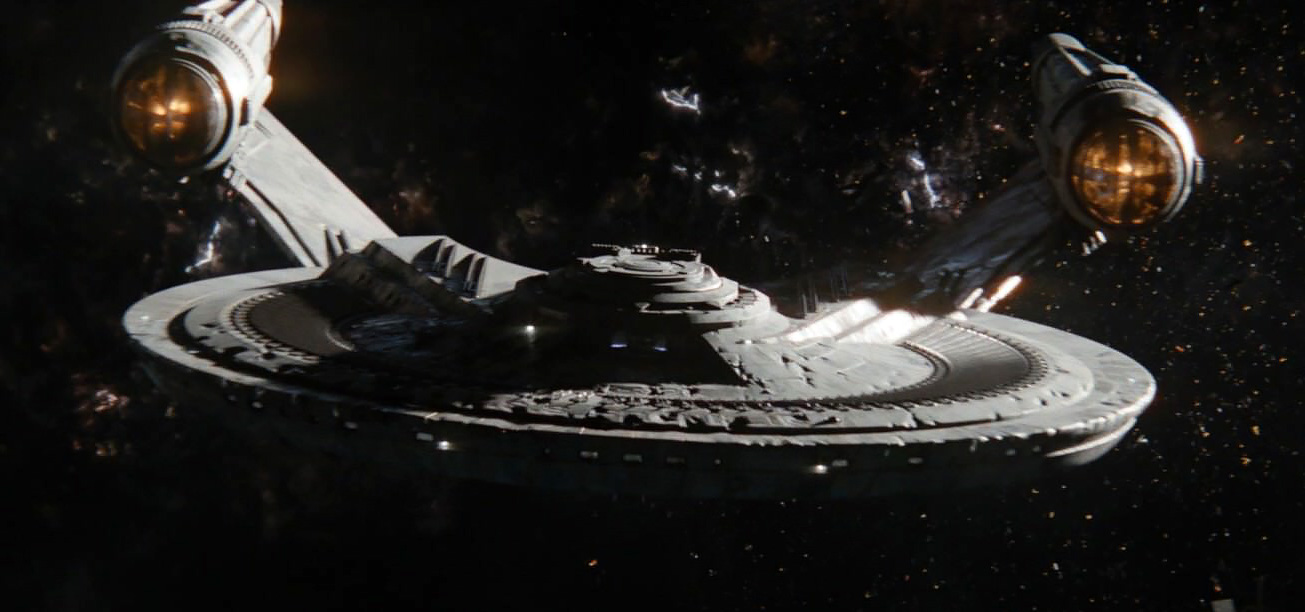
The Franklin was Earth’s first Warp 4 capable vessel, a genuine milestone in humanity’s journey to the stars. Before this ship, Earth vessels were pottering about at Warp 2 or 3, barely able to reach the neighbours for a cup of sugar. Warp 4 was a generational leap, the proof of concept that made everything else possible. But here’s the kicker: the Franklin wasn’t built for exploration. It was a M.A.C.O. ship, designed and deployed under the Military Assault Command Operations banner. This was a warship, pure and simple, built for combat rather than charting nebulae and making first contact.
I remember sitting in the cinema during the Franklin reveal, leaning over to my mate and whispering, “That doesn’t make sense.” He shushed me, rightly so, but I spent the next week down a research rabbit hole that changed my mind completely. The Franklin isn’t a mistake. It’s a story that rewards the curious.
The Registry Number Mystery: Plot Hole or Clever Storytelling?
Why NX-326 Comes After NX-01
Let’s address the elephant in the room. The Franklin has a higher registry number than the NX-01 Enterprise but is described as an older, slower ship. On the surface, that looks like a glaring continuity error. But there’s an official explanation, and it’s actually rather elegant.
Lead picture editor Dylan Highsmith explained to TrekCore that the Franklin was originally a M.A.C.O. vessel, not a Starfleet ship. When the United Federation of Planets was formed, the ship was reclassified and absorbed into the new Starfleet structure, receiving a fresh registry number in the process. Think of it like a company merger: when one organisation acquires another, the acquired assets get new internal codes that don’t necessarily reflect their original creation dates. The Franklin’s NX-326 designation reflects its position in the Federation’s registry system, not its original launch sequence.
Is this explanation perfect? No. But it holds up better than most fans give it credit for. Registry numbers in Star Trek have never been strictly sequential by launch date. The USS Constellation had a lower number than the original Enterprise despite being a newer ship. The franchise has always played fast and loose with these details, and the Franklin is simply the latest example.
The Kelvin Timeline Gets You Off the Hook
Here’s the other piece of the puzzle that often gets overlooked. The Franklin exists in the Kelvin timeline, the alternate reality created by the Narada’s incursion in the 2009 film. This isn’t the prime universe we know from The Next Generation and Deep Space Nine. The rules are different here, and they were always meant to be.
I think some fans get too hung up on canon purity. The Kelvin films were never trying to be The Next Generation. They were action-adventure stories with a Starfleet coat of paint, and they made that clear from the opening scene of the first film. The Franklin works perfectly in that context. It’s a narrative device that serves the story, not a piece of lore that needs to slot neatly into a timeline spreadsheet. Sometimes a ship is just a ship, and the story it enables matters more than the technical details of its commission date.
The Nimoy Connection: NX-326 as a Tribute
This is the detail that changed everything for me. The registry number NX-326 wasn’t chosen at random. It was selected specifically to honour Leonard Nimoy, whose birthday falls on 26 March, written as 3/26 in the US date format. Once you know this, the Franklin transforms from a confusing plot point into something genuinely moving.
The Star Trek franchise has a long tradition of honouring its cast and crew through ship names and registries. The USS Nimitz appeared in The Search for Spock. The USS Spock has shown up in various media. But the Franklin’s tribute is subtler, a quiet nod that most viewers would never catch. It’s the kind of detail that rewards the sort of person who pauses Blu-rays to read background displays, and I absolutely count myself among that tribe.
Growing up, Spock was my touchstone for logic, curiosity, and the idea that intellect and compassion could coexist. Learning that the Franklin carried a piece of Nimoy’s legacy made me appreciate the ship on a whole new level. It’s a small gesture from the filmmakers, but it matters. It says this vessel, this story, was built with love for the people who made Star Trek what it is.
Technical Specifications: What Made the Franklin Special
Armaments and Defence Systems
The Franklin packed pulsed phase cannons and spatial torpedoes, standard armaments for 22nd century Earth vessels but nothing to sniff at. This was a ship built for a fight, and its weapons loadout reflected that mission profile. Instead of shields, the Franklin relied on polarised hull plating for defence. Shields wouldn’t become standard until later, but the polarised plating was tough enough to take a beating and keep the crew alive. The ship’s rugged design wasn’t an aesthetic choice. It was a survival strategy.
Auxiliary Craft and Crew Complement
The Franklin carried a complement of 22nd century shuttlepods, used for reconnaissance, transport, and emergency evacuation. Its crew size was consistent with other Freedom-class vessels, smaller than the NX-01 but still capable of independent operations over extended periods. The ship was designed to operate with minimal support, a trait that would prove vital after its disappearance. When everything went wrong, the Franklin was built to keep going.
Warp 4: The Speed That Changed Everything
Before the Franklin, Earth ships were limited to Warp 2 or 3. Warp 4 was a generational leap, the moment humanity stopped crawling and started running. The NX-01’s Warp 5 capability gets all the glory, but the Franklin was the proof of concept that made the Enterprise possible. Without this ship pushing the boundaries of what Earth engineering could achieve, there’s no NX programme as we know it. The Franklin is the unsung hero of Earth’s warp development, the testbed that proved faster-than-light travel could be more than a crawl. That deserves recognition.
The Franklin’s Disappearance: Lost in the Gagarin Radiation Belt
In the early 2160s, the Franklin went missing while operating in the Gagarin Radiation Belt, a region of intense subspace radiation that disrupts sensors and communications. The ship was presumed lost with all hands, reclassified as missing and eventually written off as destroyed. For over a century, that was the end of the story.
The Gagarin Radiation Belt is a nasty piece of work. Subspace radiation plays havoc with navigation systems, and any ship that loses power in that environment is effectively invisible to rescue efforts. The Franklin vanished without a trace, and the galaxy moved on. But the ship wasn’t destroyed. It had crash-landed on the planet Altamid, where it would remain hidden for more than a hundred years, waiting for someone to find it.
The Franklin as a Survival Vessel: Jaylah’s Home for a Century
This is my favourite part of the Franklin’s story. The alien character Jaylah, introduced in Star Trek Beyond, discovered the crashed Franklin and used it as her home. She adapted its systems for long-term survival, coaxing power generation and life support from a wreck that had no business still functioning. She built defensive measures around the ship, turning it into a sanctuary in a hostile world.
There’s something deeply Star Trek about this. A ship designed for war becomes a place of refuge. A tool built for combat is repurposed for protection and hope. The Franklin was built for resilience, and it fulfilled that purpose even in its death. Jaylah’s story wouldn’t exist without the Franklin, and the Franklin’s legacy wouldn’t be complete without Jaylah. They’re intertwined, a testament to the idea that even our most militaristic creations can become something more.
The thematic resonance here is hard to miss. The Kelvin films are, at their core, about survival and adaptation in the face of overwhelming odds. The Franklin embodies that theme perfectly. It’s not the biggest ship, or the fastest, or the most advanced. But it’s the ship that kept going when everything fell apart.
The Franklin in Star Trek Online: A Playable Legend
The Franklin’s legacy extends beyond the films. Star Trek Online added the USS Franklin-A as a playable vessel, giving players the chance to take this underdog ship into battle. The game’s community has embraced the Franklin, using it for roleplay and themed builds that celebrate its unique place in Star Trek history.
Star Trek Online isn’t canon in the traditional sense, but it keeps the Franklin alive for a new generation of fans. I’ve spent more hours than I’d care to admit flying the Franklin in STO, and there’s something genuinely satisfying about taking an underdog ship into combat and proving it can hold its own. The game gives the Franklin a second life, much like Jaylah did on Altamid, and that feels appropriate.
Was the Franklin the Most Underrated Starfleet Vessel Ever?
Let’s make the case. The Franklin was a pioneer, the first Earth ship to reach Warp 4 and the proof of concept that made the NX programme possible. It was a survivor, lost for a century and then repurposed as a home by someone who needed it. It was a tribute, carrying Leonard Nimoy’s birthday in its registry number as a quiet memorial to one of Star Trek’s greatest icons.
Compare it to other underrated ships. The USS Defiant gets plenty of love from Deep Space Nine fans. The USS Cerritos has its devoted following. The USS Equinox has its tragic story. But the Franklin’s unique blend of historical significance, narrative depth, and emotional resonance sets it apart. It’s not the most powerful ship, or the most beautiful, or the most famous. But it’s the ship that kept going when everything fell apart, and that counts for something.
I’m biased, obviously. I’ve just spent fifteen hundred words explaining why this ship matters to me. But I genuinely believe the Franklin deserves a spot in the conversation about Star Trek’s greatest vessels. It’s a ship that rewards curiosity, that reveals new layers the more you learn about it, and that embodies some of the franchise’s best themes. What do you think? Is the Franklin underrated, or am I just a sucker for a good origin story?
Further Reading and Resources
If you want to dig deeper into the Franklin’s story, Memory Alpha has the definitive technical specs and history. The TrekCore interview with Dylan Highsmith explains the registry number reasoning in detail. The Scifi StackExchange thread breaks down the “plot hole” defence with impressive thoroughness, and the Reddit community at r/StarTrekStarships has plenty of fan opinions to browse.
For more geeky deep dives and pop culture analysis, I write regularly about Star Trek and other obsessions over on the blog, including a piece on whether the crew of the Enterprise were pure geek pride. Because even entrepreneurs need a break from SEO talk sometimes, and frankly, I’d rather be talking about starships.
Jonathan Bird
Head-Honcho over at DeliveredSocial.com – an award-winning digital marketing agency. You’ll often find me tucked away watching Star Trek (yep even Discovery…) or reading the latest business book (it’s my thing!).
Head-Honcho over at DeliveredSocial.com – an award-winning digital marketing agency. You’ll often find me tucked away watching Star Trek (yep even Discovery…) or reading the latest business book (it’s my thing!).